PS - First episode: Francis and Vaari
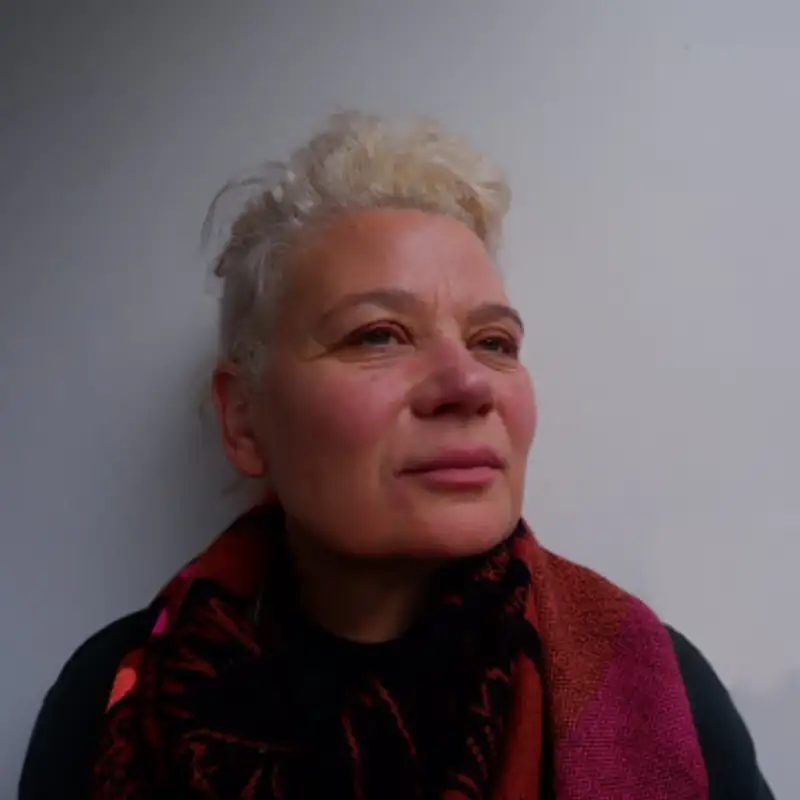
Download MP3Hello, and welcome to Producing Strategies. I'm Frances Hossel, and with me is Farri Klaffik.
Speaker 2:Hi.
Speaker 1:To explain what we're going to do here then, for this conversation, myself and Farri are going to talk about her practice with a view to thinking about modes and strategies of production. And that this is the first in a series of conversations where myself and Vari will be talking to other producers about their strategies for production, things they do, and how they work.
Speaker 2:So, yeah, the strategies, whether they emerge through practice or whether it's the other way around, that the practice emerges out of a strategy, this is a general collective investigation into what we can learn by making and how we can make learning.
Speaker 1:Yeah. And I think one of the things that's come up in our conversations is that this is not specific to what used to traditionally be called art. Actually, the nature of contemporary practice means that actually what people might do might roam across a variety of different strategies and methods and so on.
Speaker 2:Yeah, think roaming is a useful word because it's the sort of, you know, I'm interested in a process of accretion, how we borrow less more or less responsibly from from other disciplines. Mhmm. And those those borrowings have to do with audience behavior, production behavior, I think. So I heard the Hammond song from The Roaches last night, and this line, Do your eyes have an answer to this song of mine? I really liked because it speaks to that interdisciplinarity of how we capture sound through vision and how we might use these different ways of seeing without necessarily like visual seeing and how we might think into those things through material production even immaterial production.
Speaker 1:Great, yeah. That makes a lot of sense to me.
Speaker 2:That's good, because I'm not sure it made sense to me as I was saying it.
Speaker 1:Maybe we should keep an open mind as to whether things have been finely pinned down in terms of their meaning. Yeah. But let's start with your own practice, because that's what I'm interested in today. So, like, where did you begin your own practice?
Speaker 2:I guess so, I mean, that was something I was thinking about just now, is like, how could we have called it my own practice? And I think it most properly started in what was my final year as as the at Temple Bar Gallery as this sort of assistant director, but the main role was as curator. So I ran a programme that was specifically down to me to organize. Don't really want to use the word alter to the programmes, it's a complex thing, where I went from in the in the building, there had been something like 25 exhibitions in a year, I narrowed that down to eight exhibition moments, and they then expanded out with the artist. So we I added on to that program.
Speaker 2:So like with Katie Holton, she wanted a long time to install, so to facilitate that and not to be closed, we we ran an audio out into the street. And also, she'd been working collectively with a lot of other producers, so we came out of the gallery and into Beau's pub and did a night of live events in the pub with Katie, and we cut cut those kinds of things into the program. So with Susan Phillips, we did another
Speaker 1:job. This?
Speaker 2:2002.
Speaker 1:2002. So was that this relevant? I don't know. Like, was that after you'd recently graduated? Or had you been working in the field for
Speaker 2:a while? Was sort of the opposite. It was the end of a time when I was very institutionalized, I think. And as much as those institutions don't feel so formal now in terms of the way they were then, but I suppose even even I didn't really feel that I had a community in the visual arts, it felt like a job.
Speaker 1:Right.
Speaker 2:I was starting to build community and operate in a different way.
Speaker 1:You you studied philosophy though, right? Yes. So how do you move from philosophy into forms of exhibition making?
Speaker 2:That happened through community at the time, ironically. So I my sister was studying art, and so I started to meet people who were working there and started, like, manning exhibitions, watching exhibitions, and I manned an exhibition down in what's now the Irish Museum of Modern Art that was huge, and it was just me looking after all that work and engaging with the public. And after, you know, after having studied philosophy, I never stopped working in art because there was never a reason to stop, because it could always contain if ever I felt there wasn't enough of something, you could always find it within art. There was always a way to practice, so that's how I ended up staying.
Speaker 1:So in that role in temple barre
Speaker 2:Yep.
Speaker 1:Were you was it a more administrative role or a more creative role, or was that a is there sort of a blurring of these between Yeah. The
Speaker 2:I mean, I think I've been lying, actually. I think when I look back at it, there really was a practice, so I would have met people like Paul O'Neill and worked with him towards thinking about a practice as a curator, but the responsibilities to the institution came, you know, kind of encroach on that, but I was always trying to expand what it was that Are we did, I
Speaker 1:you saying that there was admin, but there was a lot of creativity involved in the role? Is that what you're saying?
Speaker 2:There was an increasing amount of creativity in the role.
Speaker 1:Okay. And And it was was that because that was what was expected of you, or is it because that's what you ended up doing?
Speaker 2:That's what I wanted.
Speaker 1:That's what you wanted to do.
Speaker 2:To do, and the artists I was most interested in working with were the artists who wanted to think together into ways of developing practice.
Speaker 1:I see. I'm really interested in this word, the curatorial, and the word curator, which you've used to describe yourself. I've heard it said from people who are doing similar roles that they don't want to use that word. And that's part of our theme here, right, because we're talking about production. So why is the word curator useful for you?
Speaker 1:What is it doing?
Speaker 2:I think, really, I don't feel nervous about it. What I understand by the curatorial is the bringing in of other people's practice and working those things alongside mine, it doesn't fit badly enough for me to want to get rid
Speaker 1:of it. And
Speaker 2:I don't I feel like, you know, there's a friend of mine told me this story about their kid being into My Little Pony, and another kid said, well, boys don't like my little pony. And he said, well, I'm a boy, and I like My Little Pony, so boys like My Little Pony. So whatever I do as a curator, curators do. I don't feel the need to change that. Some people might, but I just don't.
Speaker 1:Yeah. I guess it might be that some of the reticence in using the word or hesitancy or whatever you want to call it is that there may be a sort of antipathy towards a certain type of curatorial practice which seems to be about, for want of a better word, the ego of the curator. That it's sort of their vision, and they're very much putting themselves forward as being the the creator of the show rather than somebody who is facilitating relationships and so on. But it seems to me that you're doing something very different here.
Speaker 2:I think the anxiety those anxieties exist around any term, so they exist around the artist as sole producer as much as they might around the word curator. So in some ways, you can assuage the anxiety by using a different term, or you can work with the anxiety.
Speaker 1:Mhmm.
Speaker 2:Make it a part of your practice, acknowledge it, and sort of build it in. So I've never really so a lot of people say that I work more like an artist. Again, it's just I don't feel the need to not live with that. I feel again that maybe going into trying to go into more precise terms, I'll come you'll come up against the same kinds of problems with those terms, what that might mean. So your I mean, your question about authorship, there really are moments when I feel like I author things, whatever those things are.
Speaker 2:It might be a format. It might be a specific thing within a set of other things.
Speaker 1:But it it it feels to me like the embrace of the word curator or at least the comfort of being associated with that word is well, okay, rather than state that, maybe I'll ask it as a question. Is a pragmatic decision on your part or is there something more ideological? Like are you saying, look, I'm happy to be called a curator because that's the way the world is and that will help me with funding legibility and so on. Or is there also a kind of personal investment in that role on your part?
Speaker 2:I suppose I suppose, you know, it's something that I kind of grew into, like we did we were called exhibition organizers at a certain point, and then the term curator, you know, there are lot of questions asked around curating, and curating had to sort of defend itself and act in certain ways.
Speaker 1:So when's this in sort of late nineties?
Speaker 2:Late eighties, early nineties, the conversation started to happen. And so I suppose I adopted it then alongside other people who adopted it. It's not it's absolutely definitely not a funding question. So there's questions when you might call yourself the director of these institutions that I seem to keep building up around myself, and sometimes I call myself that, the director.
Speaker 1:Sure. But there's a usefulness, there's a utility here insofar as it's a legible word, right? Where if one is calling oneself a producer, because that is sort of less in common use, it might be a little bit more difficult to articulate what it is that you're doing.
Speaker 2:I guess really the usefulness of it is to do with the specific attachment to the visual arts. Yeah. And the discipline of the visual arts is something that I'm very embedded in. I think that's probably where it is. A producer, more generally, you know, if I'm working with something that feels more like theatre or something that feels more like music or song, it's actually all within the vocabulary of the visual art.
Speaker 2:So I think that's probably how it's useful.
Speaker 1:Yeah. I I totally understand that. I guess already mentioned that there was a sort of perhaps a desire to question the role of the curator as auteur Yeah. And it'd be about ego, but then there was also another perhaps anxiety around it insofar as it felt like that word was so overused Yeah. In all different fields to become almost meaningless.
Speaker 1:Where you have Katy Perry, for example, my favorite example, curating cheap jewelry for a high street brand.
Speaker 2:I don't mind if it's meaningless.
Speaker 1:Yeah. Okay. That's great. That's really interesting to hear. Can we talk a little bit more about this what you've said other people have said about you as working like an artist because I'm pushed back against this if you like.
Speaker 1:Like one thing that occurs to me about your own practice is that as you said, it's about facilitating other people. It's often not about you. Right? It's not about your own vision. It's about you as bringing someone, like relationships together.
Speaker 2:You know, it's interesting that word facilitating because I'm not sure that I do make it easier.
Speaker 1:As someone who's worked with you, I'd say that's a complicated issue.
Speaker 2:It's really, you know, I'm I'm very interested in the something that there's this kind of term that was coming up for me in the last couple of days was the idea of the snow globe Mhmm. Where you're you're sort of static and then you shake it all about and you change the environment. And I'm really interested in the idea, the possibility of collective ambition, however complex that is, and of of realizing through collective thinking and making, through collective articulating. However, I mean, it's hard, however hard that
Speaker 1:is. And
Speaker 2:I'm interested in that, yeah, so those kind of possibilities of, you know, I was thinking about Django in terms of the kind of hierarchy, how you make a hierarchy, it's not non hierarchical, it's maybe just switching the hierarchies around. And one of the things that I've said before is that the artwork becomes the executive, becomes the lead in the situate in any of the situations. And I'm really interested in that, that the work if we're working, it's the work that becomes the boss in the sit or the Yeah. Know, moments with work where the work starts to kind of self author or
Speaker 1:become
Speaker 2:collectively authored. That's what I'm interested in.
Speaker 1:Is that what's hard then? I know that and I I've like, we brought in a project where there was five of us, so I'll just talk about myself for a second, that the thing that was hard for me was, I guess, in some sense trusting the group Mhmm. And then it also kind of bracketing one's ego or one's own like individual sort of propensities or whatever that you want to call them for the sake of the the larger group Mhmm. Which is a difficult thing and involves trust. Right?
Speaker 1:What do you find hard about those scenarios?
Speaker 2:Same.
Speaker 1:Same.
Speaker 2:Yeah. The same thing. It's trust. It's the self examining around ego, frustration, around, you know, around communicating because it really relies on that. So if you're working with other people, it really relies on precise communication, which is hard.
Speaker 2:Yeah. So language is hard. So again, it's, you know, making things and producing things, really difficult and it's particularly difficult to try to both think as oneself and as not as others, but around others.
Speaker 1:Yeah. Again, just talk about myself for a second. Learning to recognize in order to navigate power relations. I think you're using the word hierarchy. It's maybe the same thing.
Speaker 2:Yeah. Relations are better.
Speaker 1:Yeah. I'm not sure it's better, it's just a different way of thinking about it.
Speaker 2:Yeah. No, that's, I mean, that's really true. So one of the things I'm really interested in is this idea, is the idea of forming a definition, which I haven't done and I don't want to because I don't want to do it alone, of reputational labor. So the kind of work that we have to do in order to make anything happen. There seems to be a lot of this kind of work that I'm calling reputational labor, which is about clarity, a kind of management of how we present.
Speaker 1:Is that about the accumulation of cultural capital?
Speaker 2:Yeah, recognizability as well.
Speaker 1:I see, yeah. Is the word
Speaker 2:Knowability, understandability.
Speaker 1:Is that why the word curator is useful then? Yeah.
Speaker 2:And so in that situation where we were all working together, somebody like Lily coming in and articulating some things, proposing articulations of it was really interesting.
Speaker 1:Would you want to just quickly say what you're referring to?
Speaker 2:So we're talking about Dirty Solutions, which is a collective, what we call an exhibition club in the end. The idea of club was kind of really central, it was how it began. And some of it was to look at, so it started from actually a conversation that you and I had where I was saying to you, what do we need to do now? There's been COVID. There's been a whole set of situations.
Speaker 2:What do we need to what's missing? And so some of that was this moment of informality, but engaged very engaged informality of production, collective gathering around production.
Speaker 1:So who just say which people were involved in?
Speaker 2:So then we approached Lily Cahill, Isabel Nolan and Aphra Hill, and that stuck as a group, and it was hard to produce something, and so the ideas around that developed really collectively. And then we started to engage other artists along the way, they became involved in the process, and Tampa Bay Gallery really, really nurtured that.
Speaker 1:Should we say what the outcome was?
Speaker 2:So the outcome was this event called Dry Run, which was a one night event with a small audience, smaller than I think I would have liked, but safe, which was a really useful part of
Speaker 1:it. Mhmm.
Speaker 2:Do you want to describe?
Speaker 1:I'm not sure if I can. I think you've done a good job of describing how the group emerged, and it was about some sort of collective endeavor to just take a pause. One of the reasons that it was hard for me was that there was sort of different ages and different sort of, I guess, sort of different experiences that people brought into the group. And a lot of our discussions seem to be about navigating in a safe way our relationships, right, and working out what our collective understandings of certain things were. And I think we did work that out by the way.
Speaker 1:Yeah. So the the event, how would you describe the event? It was a semi choreographed, performative event that took place over one evening Yep. That had a sort of a loose thematic, and the thematic was a dry run or rehearsal for an event to come, which may or may not have been a stage show or a TV show. And then within that, we gave a series of artists the opportunity to sort of test something out.
Speaker 2:Yeah. So we were looking at things like amateurism, intensity of amateurism, the background, the things that are kind of radiant with possibility. So maybe it's the static snow globe that gets where the snow gets raised up. Alana Egan did this did a really beautiful mise en scene where there was where there was that idea of things, props that were lying as yet to be used that set it up. And then the artists made this amazing agreement with all of the artists who were involved that we wouldn't announce the lineup in advance, so that there was a safety in that as well, and that they the artists kind of emerged as performers across the evening
Speaker 1:Yeah.
Speaker 2:Which was quite extraordinary. And it was what was extraordinary was that how how much people were really invested in us, that that felt like a relief, a set of possibilities.
Speaker 1:And I I think the related issue that emerged out of that was, as you said, was a small audience, but it was one where there's a lot of goodwill. Mhmm. And so it was never quite clear until the very end who was a performer and who was part of the audience. I like that. So it felt like being part of a community.
Speaker 1:Yeah. And like that was some of the conversations that we'd had as initiating conversations, which was in the sort of aftermath of COVID and a closure of a lot of studios
Speaker 2:Yeah.
Speaker 1:That there didn't seem to be much opportunity for people within sort of art, for want of a better word, weren't many opportunities for people to sort of meet.
Speaker 2:Yeah. So they think I mean, goodwill is hard, right? Mhmm. So goodwill is also work. Yeah.
Speaker 2:It takes work. So these kind of things where you where you say, like, you know, somebody else said that they left their critical self behind, and and so you're, you know, they're your your anxious ego self is going, oh, if you were critical, what would you say? But actually, that's all that's all work, that's all buy in. I've often
Speaker 1:used the word hospitality to think about that, because it's about hosting, and it could be around an art space, but it could also be about the sharing of ideas, you know.
Speaker 2:Yeah. So it's hospitality, but it's also kind of potluck dinner hosting. And the idea of having this role for this minute. So I'm kind of interested in that idea that there are roles that we can switch out all the time. Maybe Curator still sounds like that to me, and maybe I'm using know, maybe the term is out to Asia Dora goes through, you know, it's like maybe I'm wearing flares and I've been wearing them since the nineteen seventies and they've become in and out of being fashionable again, and who cares?
Speaker 2:Mhmm. You know?
Speaker 1:I I wanna take the opportunity for you again to talk about the stuff that you've done, your curator, but but can we just stay on this for just a Yeah. A few more moments insofar as we took the idea of this being backstage at a TV show or a theater Yeah. And it was a dry run or a dress rehearsal. Yeah. I think that might be a way into one of the things that we can talk about here and relating to your practice, which is how you might borrow what I think you've called in the past practice or strategies from other mediums.
Speaker 1:So in this case, we've got theater, we might have TV, but we didn't like it wasn't a scripted play No. And it wasn't broadcast. No. But I know that's something that you've done a lot of. Do you want to talk a little bit about that, about how you might use strategies from other disciplines?
Speaker 2:Yeah. Sometimes there's strategies and sometimes there are statics, and sometimes there are just sets of rules, and sometimes those you know, it's a mechanism. So one of the things that I've used over and over again is is from Augusto Ball from the newspaper readings, which is the idea of taking two texts and placing them against each other so that you make a third thing. And I've I've used that over and over again, this idea that you make the third thing, that the reading of one inflects the other, informs the other. And then there's this kind of third knowledge, third making that comes out of it.
Speaker 1:And you're saying the the the word that's useful to describe that is mechanism? Yes. That's a useful word.
Speaker 2:So sometimes the formats can also Yeah. Work in that way. So you take the format of something from theater and splice it into a format of something from visual art to make a third or fourth format. So, yeah, it's kind of irresponsible, but it does have an underlying mechanism that comes out of that very simple thing, the newspaper readings. And what I like about those is that they are really available, the newspaper exercises from Boyle.
Speaker 2:And the the it's the interruptibility that I'm interested in as well.
Speaker 1:I like the you used the word irresponsible, but I like the generosity that comes from that because I'm trained, although I'm leaving it behind, like as an art historian, so one of the things I was trained to do was attend to medium specificity.
Speaker 2:Mhmm. Mhmm.
Speaker 1:Right? Those things which are specific to a medium. Mhmm. So in theater, that might be a certain thing, photography might be another thing. Whereas it seems that you're sort of somewhat gleefully, irresponsibly not attending to the specifics of the medium, instead you might be borrowing certain mechanisms or strategies from various different ways of doing things.
Speaker 1:Would that be
Speaker 2:Yeah. Lots of those things have to do with the question of distribution Yeah. And engagement, because we just have a problem. There's a problem always with uniqueness in the visual arts, it's just a problem.
Speaker 1:What do you mean a problem?
Speaker 2:So so, you know, there there are works of art that are not very easy to distribute. They're singular. We go we go to visit
Speaker 1:Oh, I see what you're saying.
Speaker 2:So that's an amazing thing in one way. We can go and visit us, there's and there's destination and and the experience of, you know, the experience of going and going with others. But also, it makes for it a distribution difficulty. So the distribution difficulty with music was overcome by gramophone records. And that meant that a lot more people could get involved in the production of music, and it could spread out.
Speaker 2:So it could spread out of it could spread out into other kinds of communities, and famously, there was a there was a whole issue with who got to make records. And that's something very interested in relation to paradigms. Who gets to do a thing
Speaker 1:Mhmm.
Speaker 2:Is super important. Who gets to see it? Who gets to do it? Who gets to take part? So if we've got a book that's that we can we can go and buy a secondhand copy of a book, I have the same copy of that book as anybody in the world, the same artwork.
Speaker 2:I have access to the same artwork. So that's a little bit of a that that became something problematic in relation to the discipline that I've been in, in the visual arts. That was the problematic. How do we work on that audience experience, collectivity, conversation? So you've got something like Venice, which is effectively a festival, know, Graceland, which I'll talk about in a moment, because we, you know, the art world can go to Venice and we can all collect together, and the interesting thing about that is we all experience the work at the same time.
Speaker 2:So we go into a gallery and it's a solo experience, which is fine. But also we go to something like Venice and the conversation and the work is being exposed at the same time and we're all viewing it together possibly for the first time, or this conversation between artworks we're seeing together for the first time. And that happens in theater or at a gig, and it happens at a festival, but it was only happening in inaccessible ways for the artworks. So I thought, what if we try to do that in a smaller, more local way, bring in the artworks and run this festival model so that it expands over time rather than space? And we're all seeing the same works at the same time, and how does the how does that change the experience of looking at artworks?
Speaker 2:How does that change our engagement with the work? So, yeah, so when I'm talk we're talking about format mechanisms, distribution was super important. So one of the things that I was able to do with Grey Sands, which happened in a field in Drummaher, very intentionally, I didn't wanna run it in the Phoenix Park. I wanted people to have to be able to have to travel to it so that we're all in the same space, held in the same Just
Speaker 1:take a beat. So explain for someone who'd never heard of Gracelands what Gracelands is. And to clarify, is Gracelands the thing you did after Temple Bar? What is the timing here and what happened?
Speaker 2:So I left Temple Bar 2002 and worked freelance, did some various exhibitions as guest curator back in Temple Bar Gallery and across project and internationally. But what I wanted to pick up on, again, were the events that I'd run-in Temple Bar, where it was an audience looking at something at the same time. Quite I had been engaged with an auditioning house, so that question around the distributability of artworks was top of mind, and there was a critique of multiples of the edict saying that these are like lesser artworks. And somebody said at that time, film works. You know, if you watch a film work, you're all watching the same work.
Speaker 2:So I I thought, okay. Well, that's useful. So I wanted to make something that borrowed the festival format
Speaker 1:Mhmm.
Speaker 2:From literary festivals or music festivals or large visual art festivals and make it very local so that it was open to the audience to audiences that were used to seeing visual arts and also those people who were not. And to see what would happen if I took in these works from across the world that could be sent, you know, at that point, it was a DVD that could be sent from anywhere in the world, and I could show that artwork in a field in in Drummer Hair.
Speaker 1:Which is in Sligo.
Speaker 2:Right? Which is in Sligo, the bottom of a field. As long as I had speakers and a screen Mhmm. And a relatively good projector, I could show the same works that were shown anywhere across the world.
Speaker 1:So this is an event that takes place over an evening?
Speaker 2:Took place over one evening. Yeah. And we had the very first ones, so there were some performances, odd little pieces of sculpture work, and and so in order to do the setup for the festival, Grace Weir and Joe Ork are artist friends of mine lived lived in Drummer Hair and had a field. So they're the people that I knew with the field, I approached them to use their field. And then looking at the management of the space, they had built their house by working with an architect called Dominic Stevens, and so I worked with Dominic to design a site that was really boggy, marshy end of their field to manage the marshiness, and we made these circular audience pads pods.
Speaker 2:Made them together with the model in Sligo. And again, that hybrid thing, I managed that by working with the model in Sligo who paid for our insurance, by bringing together what people could easily do
Speaker 1:to
Speaker 2:make this festival site, to program this festival. And when I did it, because we called it a festival, everybody assumed, the next one, when is the next one? So that was 2,008, and I programmed a film program, so obviously it had to happen at nighttime for the darkness, a series of readings that were from I'd noticed that artists would often have in their studios books that say that were about how to do something, that were really about, like, learning the discipline of how to do something, and so we had a series of readings of how to do various different things in the in the little marquee tent. So there were various kind of interactive performances that happened along and a program of films that was from things from Joan Jonas to Johannes Belling, and I was able to make the program that I wanted to. Also, I was able to make a program I wanted to because I was borrowing things and showing them for just one night rather than exhibition.
Speaker 1:There were how many of these were in Sligo then? Because there were other iterations of this There
Speaker 2:were other iterations. So we ran it in Sligo, I think four times, and then got invited to move. We got invited to take part in Eva, in the milk market in Eva, and we
Speaker 1:Which is in Limerick.
Speaker 2:Which is in Limerick. And again, we ran for one night, we transformed the milk market into like an institution, temporary institution using all the mechanisms from the market. We with O'Sheen Byrne, for example, we made a stage for performances from fish stands. Mhmm. We made a kind of contemporary museum upstairs using the stalls from the so there was a there was Derek Byrne works, there were historical works, there were Elisitsky reproductions Mhmm.
Speaker 2:That were that were there in conjunction with the Fanaba Museum. Again, you know, I'd find that lots of those larger institutions who had collections were very interested in manifesting their collection in this way, and it was easy enough to do because we were just doing it for one night.
Speaker 1:And then how many more were there?
Speaker 2:Then there was a version at the Irish Museum of Modern Art where we turned the formal gardens into the idea so it was kind of Graceland's greatest hits. I re I made a juxtaposition between sculptural and performance artworks and a film program, so the the film program. And then we commissioned some newer works. So Seamus Nolan was quite key in that iteration in that he we screened some films, and then he's got leaf blowers and blew carefully designed rubbish over the audience. So a lot of it was about this kind of implication of being a static viewer and how difficult that was.
Speaker 2:And the the other thing was imagining those formal gardens as a site of protest, previous protests.
Speaker 1:So I'm going to do just a quick recap.
Speaker 2:Yeah.
Speaker 1:We've got you working like an artist, but calling yourself a curator. Right? Or involved in a curatorial practice, and it seems that that curatorial practice has used a variety of different mechanisms to kind of realize forms of collective production. Would that be a way of characterizing it?
Speaker 2:Yeah. I mean, that makes me uncomfortable because I feel like you're calling me a liar.
Speaker 1:No. And why why so? Well, I was just thinking you've moved you've done the mechanisms that you've outlined here are the gallery space Yeah. The festival Yeah. You know, the reason I'm saying this is because I think we can unpack a few more.
Speaker 1:Yeah. But why why is that making you uncomfortable?
Speaker 2:I suppose yeah, it's interesting. Why? Because I still I mean, suppose, like you say, you know, that question of working more like an artist. Like, guess I stretch things.
Speaker 1:It's interesting when you said it, that you said people say I work like an artist. You didn't say I work like an artist. You're already putting a kind of slight remove from yourself to that claim.
Speaker 2:Yeah. I feel would feel very unqualified.
Speaker 1:Yeah. And is that because of some preconceptions on your behalf as to what an artist really is? Or is it something else?
Speaker 2:It's just because I'm really not very good at my hands. Yeah. I'm just not really good at making. So I don't, you know, I don't think that that means that artists necessarily need to be good at making, but I think it's like the the drawing in of other things and and the the working with others and the working with other makers, that's important.
Speaker 1:Mhmm.
Speaker 2:That's important.
Speaker 1:Mhmm.
Speaker 2:Just, you know, to come out of from something that's a little less kind of self conscious and negative. So it's very important, the collaborative part of it. Like, maybe I need to be a co curator or something.
Speaker 1:In a slightly different context, someone doing what you you're doing would call themselves a relational aesthetics artist. Right?
Speaker 2:Yikes.
Speaker 1:Or would they? Or have I I'm not saying that, but Maybe. With a caveat, actually. Mean, it could be that what we're talking about here are modes of production, which are about the making of relations and the exploration of relations. It could well be that kind of relational aesthetics with a big r and a big a was much more embedded in forms of institutional critique Yeah.
Speaker 1:That I don't think you're involved in.
Speaker 2:No. I think that always it's important to leave in the idea of being implicated. Implicatable. So the thing that comes up for me when you speak about that is the kind of questions around responsibility and irresponsibility. So the things that you're inclined to take responsibility for or need to at the end of the day, and the things that I don't want to or that I don't need to.
Speaker 2:So I guess the curator thing is about saying, you know, at the end of the day, I will take some responsibility for some parts of this.
Speaker 1:I'm really glad you said that because that leads on to a question I wanna unpack a little bit around the notion of responsibility, the way you've said it there. Like, does that make difficulties for you and the artists because there is, in the spirit of openness and collectivity, at points a lack of clarity. Like, do some artists actually need clarity and administrative support and institutional structures, and that's not what you're doing? Does that lead to problems, difficulties, anxieties, and so on?
Speaker 2:I think if you can describe the format well enough, that's the hard work.
Speaker 1:But there needs to be a certain amount of trust between you and the coworkers though, right? Or does that trust come in advance of the working relationship?
Speaker 2:It comes in advance of the working relationship. I think it comes from I suppose, you know, you learn to better describe you learn to better describe what the invitation is, what the collaboration looks like. So, yeah, there might be times when there might be times in the past when I would have found that more difficult to describe or where the because also there's a lot of liaison like this because because you're always trying to stress the situation, because I'm always trying to stress the situation. So there is that question of me being the intermediary a lot of times between the artist and the institution. So also, I think maybe just to go back a little bit, in some ways, you know, that might if you're artists to do something, then that might lead to more difficulty.
Speaker 2:But but but more and more, maybe the question is about talking to artists about what they might like to do and trying to find a way to do that thing, to help that thing happen, and trying to find a way to negotiate with the institution to make that thing happen. So I think that's probably a little bit how things have changed for me, and that's what makes it easier, to say, What would you like to do? And how can we make that thing happen together, rather than, Will you do this and trust me? So the handing over of the trust is
Speaker 1:Yeah. But that's the risk of group collaborative work, right? Yeah. The risk that comes with trust, openness and uncertainty. Yeah.
Speaker 1:Can you describe a few more of these? We've got Dirty Solutions, which sort of borrows some of the mechanisms of theater loosely. Graceland, which borrows some of the mechanisms and expectations of the festival. Could you say some more about other projects that have used other mechanisms?
Speaker 2:So, mean, another example would be this is going to take more than one night, Mhmm. Which did, again, splice two things together. So the idea of a film, an exhibition as a film. And I I was interested in that idea of distributability and and of expanding over time where I worked with four artists. And within that was the mechanism of the exquisite corpse where they would leave something on screen and the next artist would pick up on us.
Speaker 2:So, yeah, some of the negotiating around that was really difficult. Who's the author here?
Speaker 1:Mhmm.
Speaker 2:Is it the curator? Is it the director? Is it the artist in that moment? And so, yeah, those negotiations were, yeah, really pretty hard. And I I guess, you know, it's the question like, negotiating these things from the outset, I hope I'm better at now.
Speaker 2:Mhmm. Because, like, later, you know, we worked with Oshin Byrne on a film that was a response to a question to a film from Noel Sheridan, in which he says, you know, don't be an artist if and we worked with several other artists on that, and and again, there was like so the the authorship question was pretty involved, but I I think now it was it was so we did ask some people who said no to being involved for various reasons, but I think I was better at articulating the question around what it would involve in terms of making a I mean, it's not even collective authorship, it's sort of a relay of authorship. Somebody takes on the authorship at a certain moment and somebody else takes it on another moment, and then trust is a massive issue.
Speaker 1:Yeah. And you've worked in other medium as well, TV, the fanzine. Structs me that they're also doing the same things. Right? That they're working with TV and with fanzines and print and so on that these come with a different set of prompts.
Speaker 1:There's a different couple
Speaker 2:Prompt is a super useful way to describe it. Yeah. Prompts, realistics, beginning points, like the question of kind of discipline, you know? So if we look at the zine as an informal discipline, like, I'm always playing around with kind of the questions of what's formal and what's informal and the advantages to both and and engagement points into something. And the idea of immersivity, I think, is something that always is always at the back of my mind.
Speaker 2:So, like, maybe I'll make really large scale exhibitions that look that look like a big exhibition. And well, I mean, looked like it was a very large scale exhibition like that, exhibition magnetism to down to very tiny things like zines, very distributable things. And it's it's about bringing bringing the work and the encounter together in a particular way. And that's what I was interested in in in zines, the way that they do that. Because zines are come a lot came a lot of times from the question of fandom Mhmm.
Speaker 2:And sort of, yeah, the idea of soft critique. And, again, I I I do wanna say that the people will say that that's kind of that there's an easiness to it. Like, there isn't really there there's an implication. There's a community building thing that's just it's not easier. It's just different.
Speaker 2:And I think that the idea that we don't especially in Dublin, it it felt wrong to me not to acknowledge that we're really, really implicated in every moment of production that we were looking at these shows that are by our friends and other people that we're close to. And unless we acknowledge the kind of impossibility of impartiality, we're in trouble. I like what the trouble is going lead to, don't know, but yeah.
Speaker 1:What is your role with a lot of experience as an educator say to this? Like is pedagogy an education part of your practice? Is it another mechanism? Yeah. Or is how so?
Speaker 2:I mean I always think, I think some of the things that you, one of the few things that you can teach actually is time. It's how long it takes to look at something, how long it takes to hear something, how long it might take to read something, you know, because it's always just co learning. Teaching is co learning, you know, without like being a goody goody. It it is only interesting, I guess. To me, it's only interesting if we're all learning, and, like, that's much more so so I'm older now, so so the gap is much wider between me and the students.
Speaker 2:So I have there's there's absolutely, like, a lot of unknowable things about their life experience for me.
Speaker 1:It's I do know, I'm going through the same thing Yeah. That it's taken me a long time to realize that I just need to shut up Yeah. And listen a lot more. And we're talking about third level, so we're talking about students who have a certain amount of life experience. Yeah.
Speaker 1:But increasingly, I'm realizing that the model where I impart the information that's in my head is just redundant.
Speaker 2:It's not it's not it's not live. So you might think something or hear something or read something, and then you test it with students together. You test what it might mean, what it might look like and what it might mean, but the one thing that you can teach is this is gonna take a minute.
Speaker 1:Yes.
Speaker 2:This thing might take more minutes, that thing takes less minutes. It's really like a funny thing.
Speaker 1:Whilst also acknowledging, as I know we've talked about before, acknowledging in order that you don't efface the fact that there are also preexisting power dynamics and
Speaker 2:Yeah. Like And some stuff that you know.
Speaker 1:Exactly.
Speaker 2:You know, so the stuff the stuff that I know, for example, is like the other thing is that you realize that you're that it's really not it's really important not to try and convince anyone of anything. Mhmm. That you're just going, okay. Here's a descriptor. So the art world or any world works like this, and these are the things.
Speaker 2:This is these are the mechanisms. These are the structures and the institutional things, and and some of those, you know, this is my description of them, and and so that's I I can tell you that. I can tell you that I've that I've witnessed this. I can be a witness.
Speaker 1:Yeah.
Speaker 2:Yeah. So I can be a witness. I can describe how it was to be in certain moments
Speaker 1:Mhmm.
Speaker 2:And the and the strategies that we used to get out of those moments, get out of them, get into them. So, yeah, that is it absolutely is all a part of a practice. Mhmm. Because if I'm looking at things as tools, you're going, well, how do you how do we use the tool?
Speaker 1:Mhmm.
Speaker 2:So how I use the tool is one thing. How anyone else might use the tool is, like, gonna it's only going to add to it's only gonna give a way of give other ways of using it in other hands. Other so, yeah, it's really about it's really about you know, so this one of the things about history as well is that when we try to do something fresh or when we come up against something that's problematic, somewhere along the line, somebody will have seen something similar and found a workaround
Speaker 1:Mhmm.
Speaker 2:That we can we're not starting from scratch. Mhmm. So that's you know, I think that's what I will do sometimes with with teachings, go, okay. Back then, they did this. Can we use it again?
Speaker 1:Can we use it again? That might be a good place to stop, just with a view to future conversations will involve the two of us talking to other producers. Think And about tools, yeah? Yeah, about tools and mechanisms and formats and strategies. We might find that there's some overlap and then some very different views around that.
Speaker 2:Okay. Good. Yeah.
Speaker 1:Thanks.
Speaker 2:Thanks.